Most seven-figure landscaping companies do not have a marketing problem. They have a systems problem. When growth feels inconsistent, leads fluctuate month to month, or spring always feels chaotic, the issue is rarely effort. It is structure. A true landscaping marketing system creates predictable lead flow, protects margins, and supports operations instead of overwhelming them.
Here are the five marketing systems every seven-figure landscaping company should have in place if the goal is steady, controlled growth instead of reactive scrambling.
What Is a Marketing System?
A campaign is temporary. A system runs continuously. A marketing system is a documented, measurable process that generates demand, captures leads, converts opportunities, and tracks performance. It is designed to function regardless of season or staffing changes.
If your growth depends on turning ads on in March, pausing them in August, or hoping referrals continue to come in, you do not have a system. You have activity. Seven-figure companies that scale profitably build infrastructure first and then layer tactics on top of it.
1. Lead Generation System
You should be able to forecast next month’s lead volume within a reasonable range. A real lead generation system is built around intentional targeting and disciplined budget allocation. It clearly defines which services you are pushing, where you are pushing them, and what an acceptable cost per lead looks like.
At a minimum, this system prioritizes services based on margin and demand, aligns geographic targeting with your service footprint, and balances long-term SEO with controlled paid advertising that reflects seasonality. Instead of spreading budget evenly across all services, strong landscaping lead generation systems concentrate resources on the work that drives the most revenue and long-term value, then layer in maintenance volume strategically.
2. Call Handling and Speed to Lead System
Marketing only works if someone answers the phone. Many seven-figure companies lose more revenue from slow response times than from weak advertising. The first few minutes after a lead comes in often determine who wins the job.
A structured call handling system sets clear response time standards, ensures coverage during business hours, and defines how after-hours inquiries are handled. It includes a consistent intake process to properly qualify leads and tracks missed calls and form submissions so nothing slips through the cracks. If the call answer rate is not reviewed regularly, lost revenue is almost guaranteed.
Callout: If you miss a phone call, there is a good chance that the customer will call another business!

3. Website and Conversion System
Your website is not a digital brochure. It is a production asset. Its job is to convert traffic into qualified opportunities in a measurable way. That requires more than good design. It requires intentional structure and tracking.
A proper conversion system includes dedicated service pages for core offerings, area pages aligned with your service territory, and clear calls to action that guide visitors toward calling or submitting a form. Conversion tracking on thank-you pages ensures you know exactly how many opportunities your website is producing. Too many lawn care marketing strategies focus on traffic volume instead of conversion rate. In reality, improving conversion rate by even a small percentage can produce significant revenue gains without increasing traffic at all.
4. Tracking and KPI Reporting System
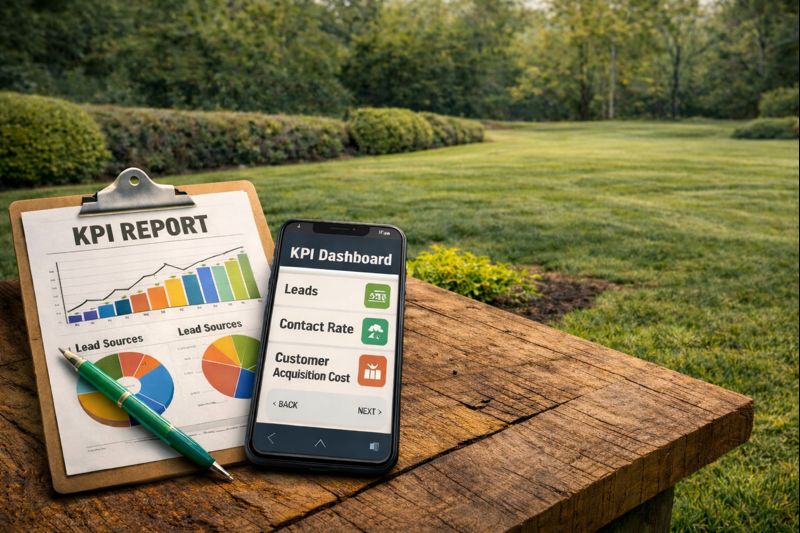
Growth becomes predictable when performance is measurable. A real tracking system connects marketing activity directly to revenue rather than just lead counts. It shows which channels produce profitable work and which ones simply generate noise.
Landscaping companies should consistently track cost per lead, close rate by service, revenue per lead, and return on ad spend. These are financial metrics, not vanity metrics. The purpose of tracking is not to produce more reports. It is to make better decisions about budget allocation, service focus, and long-term strategy. If your reporting does not influence real operational decisions, the system is incomplete.
5. Recruiting Marketing System
Marketing drives demand, but recruiting protects capacity. If you want to scale revenue without overwhelming operations, hiring must be systemized as well. High-performing operators recruit continuously rather than waiting until they are short-staffed.
A recruiting marketing system includes a dedicated careers page, ongoing job promotion, and structured follow-up and interview scheduling. When marketing and recruiting operate in alignment, growth becomes sustainable instead of stressful. Without that alignment, increased lead flow can quickly strain production and damage customer experience.
Work With a Full-Service Marketing Partner
Building and maintaining these systems internally requires time, coordination, and platform expertise. Most lawn and landscape companies do not have the internal bandwidth to manage website performance, SEO, paid advertising, tracking, recruiting campaigns, and reporting while also running day-to-day operations.
Lawnline Marketing is a full-service marketing company built specifically for the green industry. We handle every aspect of your marketing infrastructure so that your lead generation, conversion systems, tracking, and recruiting efforts operate as one coordinated growth engine.
If you want structured, predictable growth instead of seasonal guesswork, call Lawnline Marketing at (813) 944-3400 to learn more about our growth programs and how we can support your next stage of expansion.