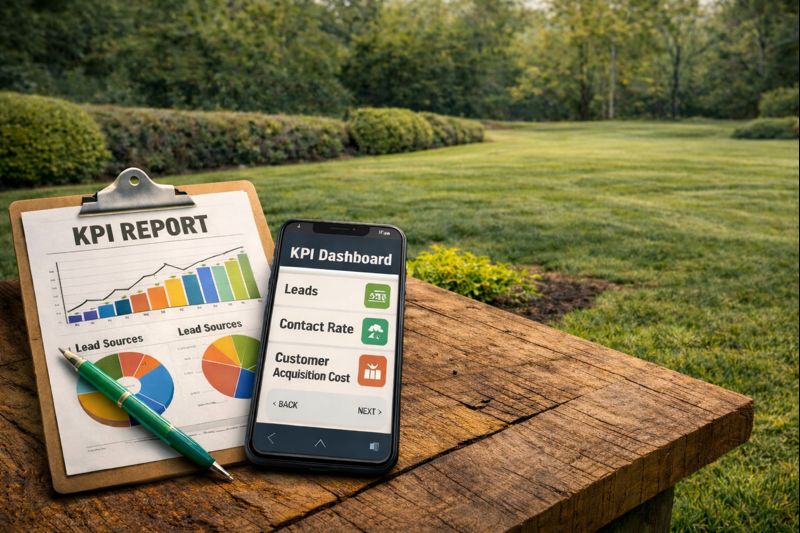
If you're spending money on marketing or even just time on SEO, networking, and referrals, you need a clean answer to one question: Which channels are producing booked work, not just leads? Most companies can't answer that because their tracking stops at "calls came in," and they never connect it to scheduled estimates, closed jobs, or revenue.
Here's the practical, operator-friendly version of call tracking and attribution: Use a small set of unique tracking numbers (one per channel), capture form submissions with UTMs, train your team to ask every caller how they found you, and review a weekly scoreboard that ties leads to booked estimates and sold work. The goal isn't perfect data; it's good-enough clarity to cut waste, fix intake issues, and scale what's actually driving revenue.
What "Good Enough" Lead Attribution Looks Like for Seven-Figure Lawn & Landscape Companies
Most seven-figure lawn and landscape companies don't need a complex system. You need something your team will actually use, and you'll actually review. A "good enough" lead attribution setup answers four questions reliably:
- Did this lead come from Google (organic), Google Ads, LSAs, Facebook, referral, or yard sign/truck?
- Did we answer the call and respond quickly?
- Did we book an estimate?
- Did we sell the job, and for how much?
If your system can't connect the dots beyond "we got calls," it won't improve decisions, because calls alone don't pay payroll. You're not trying to build a perfect analytics lab. You're trying to stop guessing and start allocating budget based on outcomes.
What Should You Be Tracking?
Track outcomes in the same order your business experiences them: leads, appointments, and sales. Leads include phone calls from new prospects, form fills, and chat or booking requests if you use them. Appointments include estimates booked and calls scheduled if you do a phone-qualify step first. Sales include estimates completed, jobs sold, and revenue, or at least average ticket by lead source.
If you only track leads, you'll over-invest in sources that generate tire-kickers and under-invest in sources that produce fewer, better jobs. The right question is not "Which channel gets the most leads?", but rather "Which channel creates sold work at a profitable cost?"
Tracking Numbers: How to Use Them Without Making a Mess
Call tracking is simple, until it isn't. The biggest risk is creating too many numbers and confusing your brand listings. Use these rules:
- Start with one number per channel, not per campaign. For example: one for Google Ads, one for LSAs, one for website organic, and one for Facebook. Keep it tight so reporting stays usable.
- Use dynamic numbers only on your website. This allows the phone number to swap based on source and keeps your reporting cleaner without changing your public listings everywhere.
- Keep your primary business number consistent where your listing accuracy matters, including your Google Business Profile, major directories, and core citations. The more you swap numbers across the internet, the more you risk name, address, and phone (NAP) inconsistencies that can create long-term problems.
Callout: Tracking numbers help most on your website, paid landing pages, and paid channels, where a dedicated number won't create listing confusion.
Lead Source Intake: The Script Your Team Must Follow
Even with tracking numbers, you still need human confirmation, because people click around, call back later, or save your number and call from their contacts. Train your team to ask every new caller one simple question: "Just so I can route you correctly, how did you hear about us?"
Then, give them a short pick-list so they don't have to type essays. Your options can be: Google (search), Google Ads, Google Local Services (Google Guaranteed), Facebook/Instagram, Referral (who?), Yard sign/truck, and Other. The goal is consistency, not creativity.
Two execution details matter. Ask early, right after you confirm name and address, before the call gets busy. Also, don't accept "internet" as an answer. Follow up with, "Was that Google, Facebook, or something else?" For web forms, capture UTMs automatically so the lead source lands in the CRM or spreadsheet without your team needing to guess.
What 5 Numbers Should You Review Every Week?
If you want this to change decisions, it must show up in a weekly rhythm. Keep the scoreboard simple with these 5 numbers:
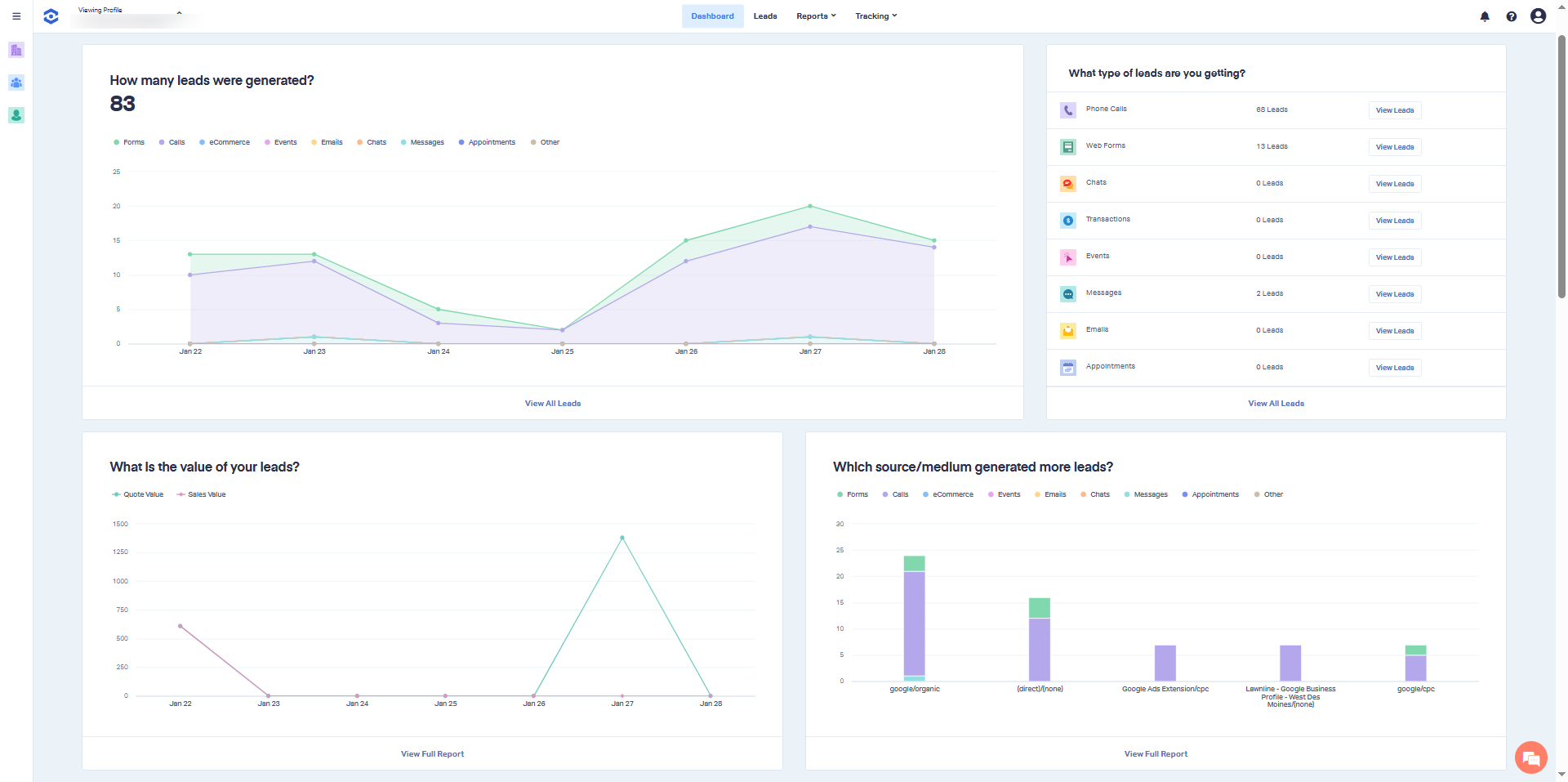
- Total leads by source (calls and forms)
- Answer rate (missed calls are a marketing leak)
- Booked estimate rate (booked divided by total leads)
- Close rate by source (sold divided by estimates completed)
- Revenue by source (even rough is better than none)
This is where the insight lives. If Google Ads generates fewer leads but a higher close rate and a higher average ticket, it might be your best channel, even if Facebook looks busy. If LSAs produce volume but a low booking rate, the problem may be intake, not marketing. Without the scoreboard, you'll guess and over-correct.
Need Help Setting Up Call Tracking?
We help lawn and landscape companies set up clean call tracking, UTMs, and lead source reporting without overcomplicating it.
Get Started With TrackingThe Biggest Lead Attribution Traps & How They're Misleading
These are the mistakes that make owners think marketing isn't working when the real issue is tracking or intake. The biggest lead attribution traps include the following:
- Too many tracking numbers create chaos, inconsistent listings, and unusable reporting.
- Only tracking leads, not outcomes, causes you to optimize for volume instead of profitable work.
- Ignoring missed calls is a killer because marketing can't overcome a broken front desk.
- Not separating new prospects from existing customers will inflate results. A service call from an existing client shouldn't count as a marketing win.
- Inconsistent categories break reporting. If everyone enters lead source differently ("google," "Google," "Gooogle"), your reports become fiction.
If your data is messy, simplify the system, not the decision-making.
Let Us Help With Your Reporting and Data Tracking!
If you want help setting up clean call tracking, UTMs, and lead source reporting without overcomplicating it, look no further than our team here at Lawnline Marketing. A key aspect of reporting and data tracking is Crystal Insights, a Lawnline-exclusive analytics platform powered by AI. With this software, we can analyze calls, forms, messages, and other inbound communications across hundreds of data points to provide clarity and usable data that drives smarter marketing decisions. Reach out at (813) 944-3400 to learn more!