Most seven-figure lawn and landscape companies do not lose jobs because they are "too expensive." They lose jobs because the prospect cannot clearly see why paying more is safer, simpler, and worth it.
So, how do you position your company as the better choice? You beat the cheapest competitor by making the buying decision about risk and outcomes, not price. That means you define a clear best-fit customer, package your service like a professional operation, and show proof that your process delivers better results with fewer headaches.
If you do it right, you will stop arguing about line-item pricing and start winning jobs where customers want reliability, communication, and consistency. Those customers will pay for it.
What "Category Leader" Positioning Actually Means
In local services, category leader does not mean you are the biggest brand in town. It means that when a prospect compares options, your company feels like the safest, most professional choice, even if your price is higher.
Category leader positioning is built on three signals: clarity, confidence, and credibility. Clarity allows the prospect to quickly understand who you are, what you do, and how you deliver it. Confidence involves leading with process, standards, and expectations instead of discounts. Finally, your credibility is backed up by your reviews, photos, and communication.
Why Competing on Price Is a Trap
If you try to beat the cheapest competitor at his game, you will usually pay for it in one of three ways. First, you may erode margin; you might win the job but lose profit. You may also attract bad-fit customers who tend to be high-maintenance, low-loyalty, and quick to churn. Finally, you can create operational chaos. When teams rush to make low prices work, quality slips and reviews suffer.
The goal isn't to sound expensive; it's to sound worth it because of how you run the work.
The Five Pillars That Make Your Company "Worth It"
Use these pillars as a positioning checklist. If your website, ads, and sales conversations reflect these consistently, price becomes less central.
Outcomes, Not Tasks
Do not sell mowing; sell the outcome, such as reliable curb appeal, predictable scheduling, and a property that looks managed. A simple example is "consistent weekly curb appeal with zero chasing, missed visits, or surprises."
Process & Standards
Cheap competitors sell labor, but leaders sell a system. That system includes service-day expectations, quality checks, communication rules, weather-delay protocols, and issue resolution timelines. When prospects can see your standards, they can understand why your service is different.
Communication Speed
In this industry, responsiveness is a luxury feature, so make it obvious and specific. You can set expectations like same-day callbacks, text or email confirmations, and clear next steps when schedules shift. The point is to reduce uncertainty and show you are easy to work with.
Proof
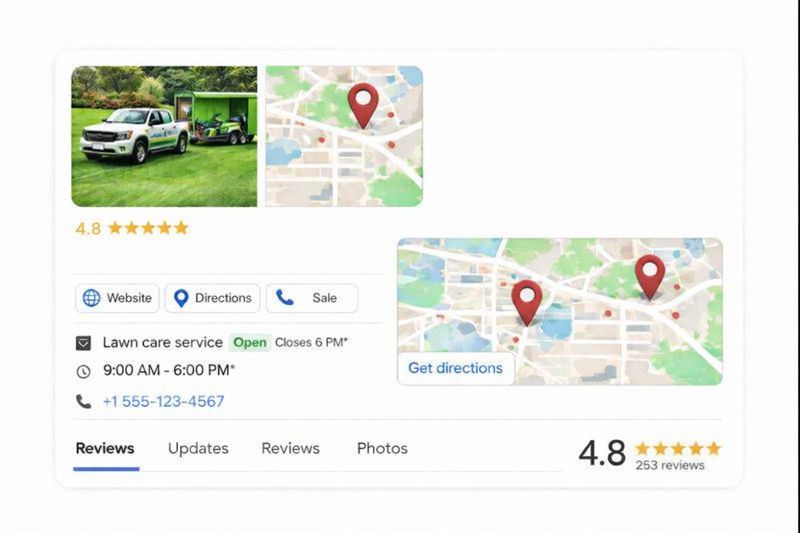
Your best differentiator is often evidence. Use before-and-after photos, recent or specific Google reviews, visible neighborhood presence, and short case examples. When a prospect sees proof, the decision feels less risky.
Fit & Boundaries
Leaders do not take every job. They set minimums, service areas, and standards. This signals demand and professionalism. It also protects your schedule and keeps your service consistent.
Message Framework: Compete Without Talking Trash
When a prospect says, "Company X is cheaper," your job is to move the conversation from price to risk.
Start by agreeing calmly: "Totally fair, there is always someone cheaper." Then, reframe: "The question is what you want to be true after you hire someone." Next, differentiate with standards: "Our clients choose us because they want consistent scheduling, clear communication, and a team that shows up with a process." Finally, invite the right comparison: "If you are comparing, make sure you are comparing scope, frequency, and what happens when something goes wrong."
No insults. No drama. Just a professional frame.
Callout: Common mistakes that make you sound like every other company include primarily leading with "family-owned", making vague promises, and a lack of photos and reviews.
Package Your Services So "Cheap" Looks Incomplete
If your offer is "basic mowing," prospects will compare you to anyone with a mower. Instead, structure your offer so value is visible. Consider offering good, better, best options, even if most people choose the middle. Bundle services where appropriate so the customer can understand what "complete" looks like. Use minimum service requirements and clear scope definitions so expectations are set upfront. When packaging is clear, cheap often looks incomplete or unclear.
The Takeaway: Make the Decision About Certainty
People pay more when they believe they will get predictable results, fewer problems, faster communication, and a company that runs on standards. Build your message around certainty, and the cheapest competitor stops being your main comparison.
Let Us Help Position Your Company as the Industry Leader
If you want help tightening your positioning so your marketing attracts better-fit customers and your team stops having price fights, our team at Lawnline Marketing is here to help! We will help you clarify the message, proof, and offer so that "cheap" is no longer the default comparison. Call us at (813) 944-3400 to learn more about how we do this as part of our full-service Growth Programs!