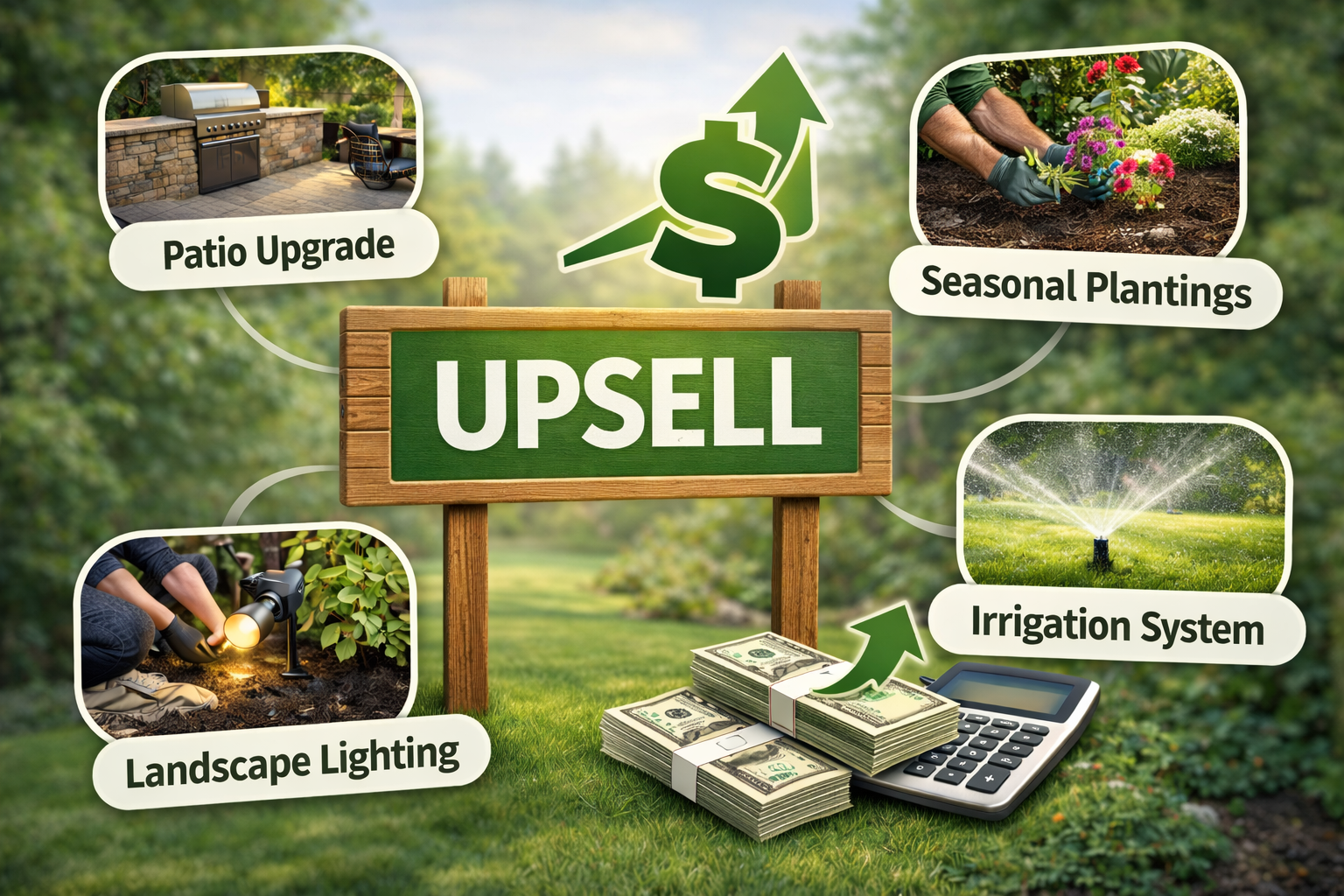
If email upsells are going to work, the calendar is the whole game. The simplest approach is to align offers to what customers are about to need, what can actually be delivered, and what has a time-sensitive window. When emails feel timely, they convert. When they feel random, they get ignored.
Why Relevance Beats Clever Copy
Email performance is usually based off of timing and relevance, not wordsmithing. Customers buy upgrades when the offer connects to something they already notice or something they want to prevent. That connection can come from seasonality, but it also comes from service timing: what's next on the calendar, what has a short application window, and what problems show up if they miss it.
Build the Email Calendar Around What's Coming Up
A strong "month-by-month" upsell calendar is really a "what's next" calendar. Each month, look ahead and identify which service decisions customers are about to face, then prioritize the ones with narrow windows.
Three buckets make this easy:
Short-Window Services (Highest Urgency)
These are services that have a limited timeframe to perform correctly, like preventative applications that only work when timing is right (for example, preventative grub control). These offers work well in email because the message is not "buy this," it's "don't miss the window."
The positioning should be straightforward: what's coming up, why timing matters, and how to get on the schedule before the window closes.
Next-up Services (Natural Timing)
These are services that logically follow what the customer already has or what's already being done for them. They are not always urgent, but they are timely. This is where seasonality plays a supporting role: certain improvements become top-of-mind at predictable points in the year, and the email simply matches that moment.
The positioning should feel like a recommendation, not a promotion: here's what most properties need next, here's what it solves, and here's the next step.
Problem-Trigger Services (Reactive but Predictable)
Some upsells spike when certain issues show up. While the weather can't be controlled, patterns can be anticipated. A good calendar plans for the moments when customers start noticing the same symptoms, and it ensures capacity is ready when demand rises.
The positioning should focus on recognition and outcomes: name the symptom, explain what the service does, and set expectations on scheduling.
Seasonality still matters across all three buckets, but the anchor should be "what the customer is about to experience" and "what can be done about it," not just the name of the season.
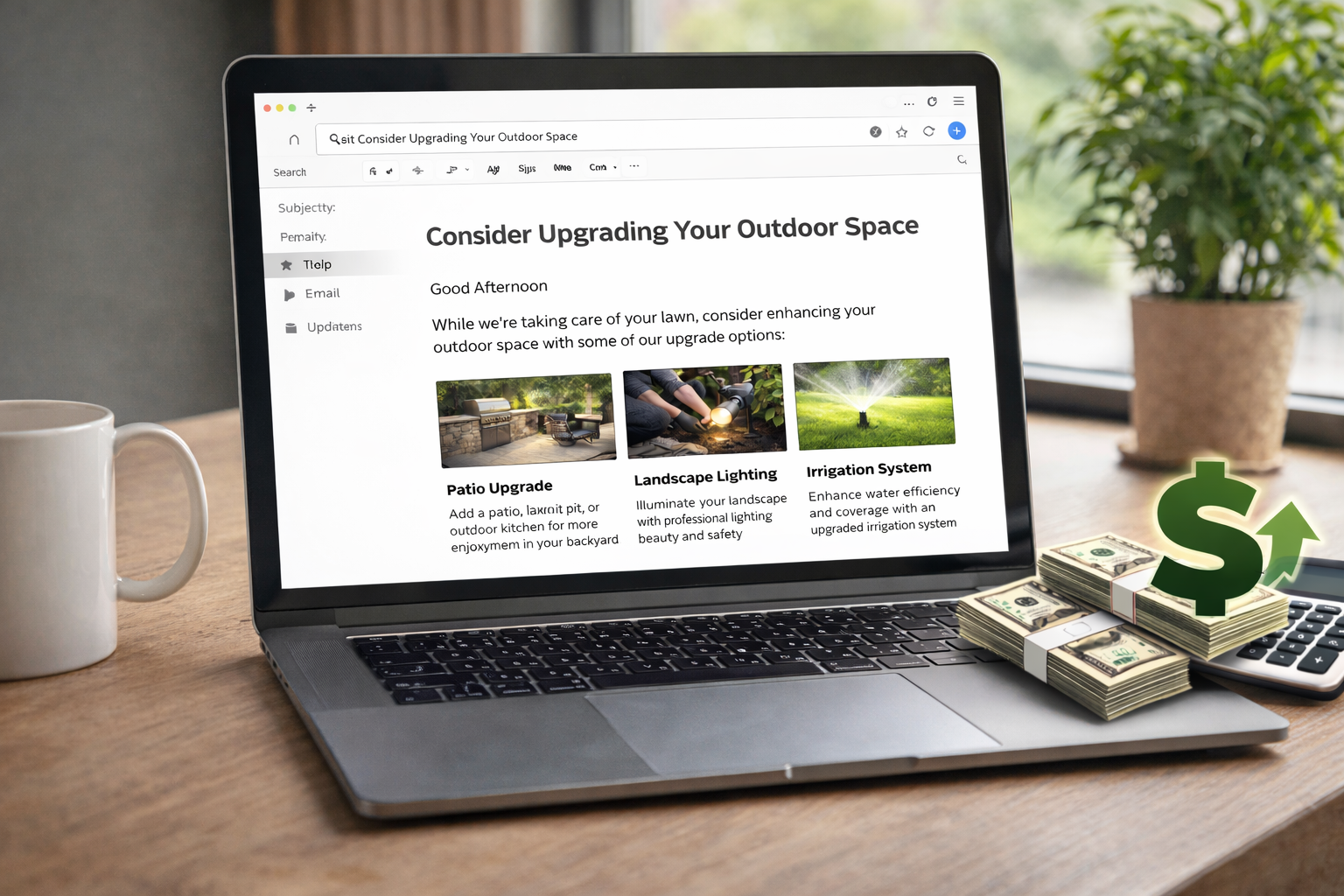
Callout: Don't send too many upsell emails! One per month is a good number to aim for.
Capacity Is the Guardrail That Protects Reputation
Upsell emails can create a wave of demand. Without capacity discipline, the result is delayed scheduling, rushed production, and frustrated customers.
Before a campaign goes out, define what "full" looks like for that service in the next one to two weeks. When the service hits capacity, pause the offer or adjust scheduling language so expectations stay honest.
Common Mistakes That Kill Upsell Calendars
The most common failures are predictable: offers go out that are not tied to what's coming up, short-window services get promoted after the window has already started closing, and too many offers run at once, which floods the office and creates production bottlenecks. Another frequent issue is promoting add-ons that the operation cannot deliver quickly, which turns a marketing win into a customer experience problem. When upsell emails consistently create internal stress, it usually signals that the calendar is not aligned to service windows and real capacity.
Build an Upsell Email Calendar That Hits the Right Window Every Time
If you want an upsell email calendar built around what's coming up, which services have short performance windows, and what your operation can actually fulfill, Lawnline Marketing can help. Call us at (813) 944-3400 to map out a clear upsell plan and execute the right campaigns through one of our Growth Programs.