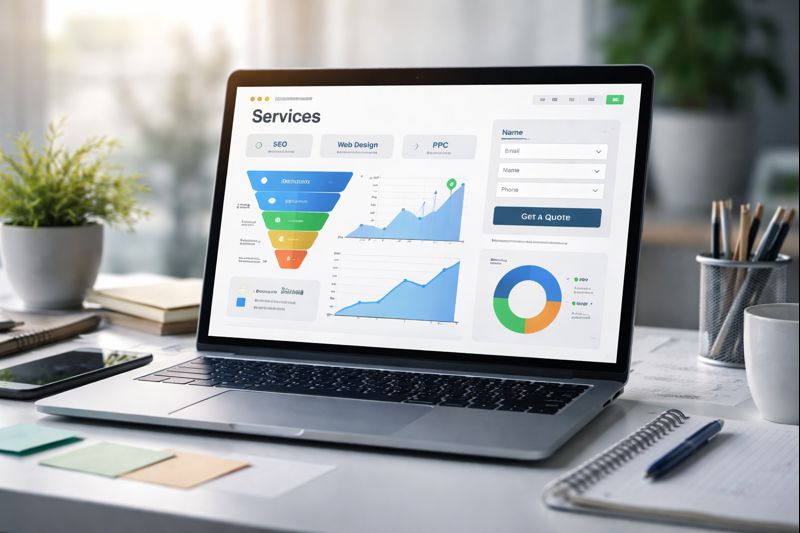
A high-converting site does three jobs fast: it builds trust, reduces friction, and sets expectations. Trust answers "Are you legit?" Friction answers "How easy is it to take the next step?" Expectations answer "Is this right for me, and what happens after I reach out?" If any one of those is weak, you will attract shoppers and "just browsing" visitors who never intended to book.
1. Make Your Primary CTA Impossible to Miss
Pick one primary action and repeat it everywhere: Request an Estimate (or Book an On-Site Consultation). When you give people multiple competing options, most do nothing. Put the CTA in the header, make it visible above the fold on every page, and keep the wording outcome-based. "Request an Estimate" is clear. "Submit" is not.
Also, do not hide your phone number. Many higher-quality prospects still prefer to call first, especially for larger projects or recurring routes. Make it easy to tap-to-call on mobile and consistent across the site.
2. Reduce Form Friction (Ask Less, Book More)
Your estimate request form should feel like a handshake, not a questionnaire. Every extra field increases drop-off, and the people willing to grind through long forms are often the ones you would rather not chase.
Minimum viable fields:
- Name
- Phone + email
- Address
- Service needed (dropdown)
- Best time to reach you
If you want deeper details (gate codes, photos, "tell us everything"), collect them after the first contact or via a second step once they are committed. A simple reassurance line helps too: "This takes under 60 seconds. We will confirm details on a quick call."
3. Add Proof Above the Fold (Reviews, Badges, Photos)
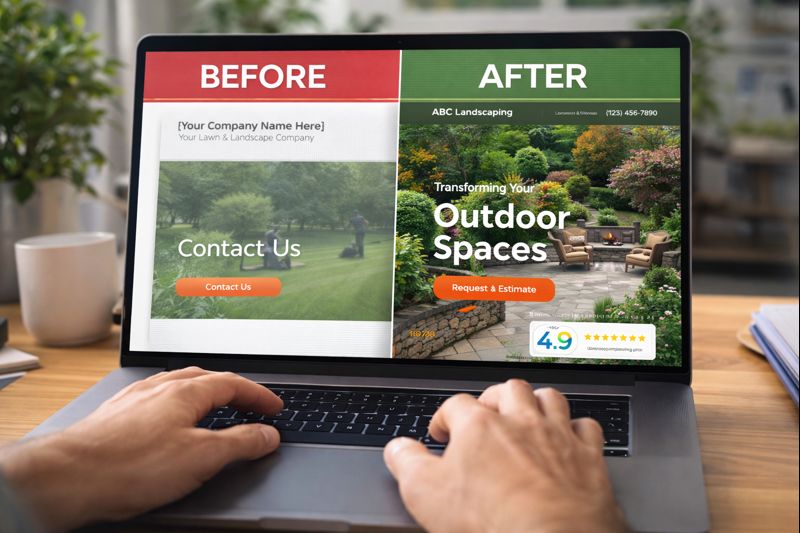
Most "tire-kickers" are not malicious. They are unconvinced. Your job is to reduce doubt before they scroll. Above the fold, pair your CTA with proof: a strong project photo that shows results, your average rating and review count, and a clear statement of where you operate. If you are licensed and insured, say it only if it is true and current.
A common mistake is burying proof on a separate reviews page. Proof belongs where people decide. If your site looks clean but does not feel credible within five seconds, you will keep paying for visitors who never convert.
4. Service Pages That Answer Buying Questions Fast
A service page is not a brochure. It is a sales conversation with someone who is trying to confirm fit. They want to know: do you offer this service in my area, are you any good at it, what is the process, and what happens after I reach out? When you answer those questions directly, your service page conversion rate goes up even if your traffic stays the same.
Explain your process in plain language. Include a few FAQs that address timelines, what is included, and what you need from the customer to quote accurately. The goal is clarity, not length.
Callout: Your services pages should make it clear what's included, when it's offered, and the areas you offer your services to.
5. Pricing Language That Filters Without Scaring Off
You do not need a full price list, but you do need expectation-setting. When pricing is a total mystery, you attract bargain shoppers and time-wasters. The easiest improvement is to include starting points, minimums, or range language paired with what drives cost. For example, you can explain that pricing depends on access, scope, materials, frequency, and property conditions, without locking yourself into a single number.
Done right, pricing language does not reduce leads. It improves lead quality. You get fewer "how cheap?" inquiries and more prospects who understand what professional work costs.
Is Your Website Converting Visitors?
We help lawn and landscape companies turn website traffic into booked estimates with clear CTAs, trust signals, and optimized lead forms.
Get a Free Website Review6. Photos That Sell Outcomes (Not Equipment)
Prospects buy outcomes: clean edges, healthy turf, sharp beds, finished installs, crisp hardscape lines. Too many lawn and landscape sites lead with trucks, mowers, and crew photos. Those can help, but they should not be the main story. Lead with "after" shots, sprinkle in before/after where it is dramatic, and organize galleries by service type so visitors can quickly find what they care about.
If your photos do not demonstrate quality, your website will always feel commodity, no matter how nice the design is.
7. Follow-up Automation That Closes the Loop
Even the best website cannot fix slow follow-up. If someone submits a form and does not hear back for 6 to 24 hours, they keep shopping. That is where most "tire-kickers" are created: not by bad prospects, but by delayed response.
At minimum, send an immediate confirmation (text or email) that sets expectations for next steps. Then ensure same-day outreach with a second attempt if you miss them. Track lead status in a simple pipeline so nothing disappears into an inbox. Your conversion rate is as much an operations issue as it is a website issue.
Ready for a Full Marketing System That Produces Consistent Leads?
If you are done guessing and want a marketing program built for seven-figure lawn and landscape companies, call Lawnline Marketing at (813) 944-3400. Our full-service marketing programs include high-quality websites designed to convert, plus the strategy and execution needed to keep qualified leads coming in predictably.