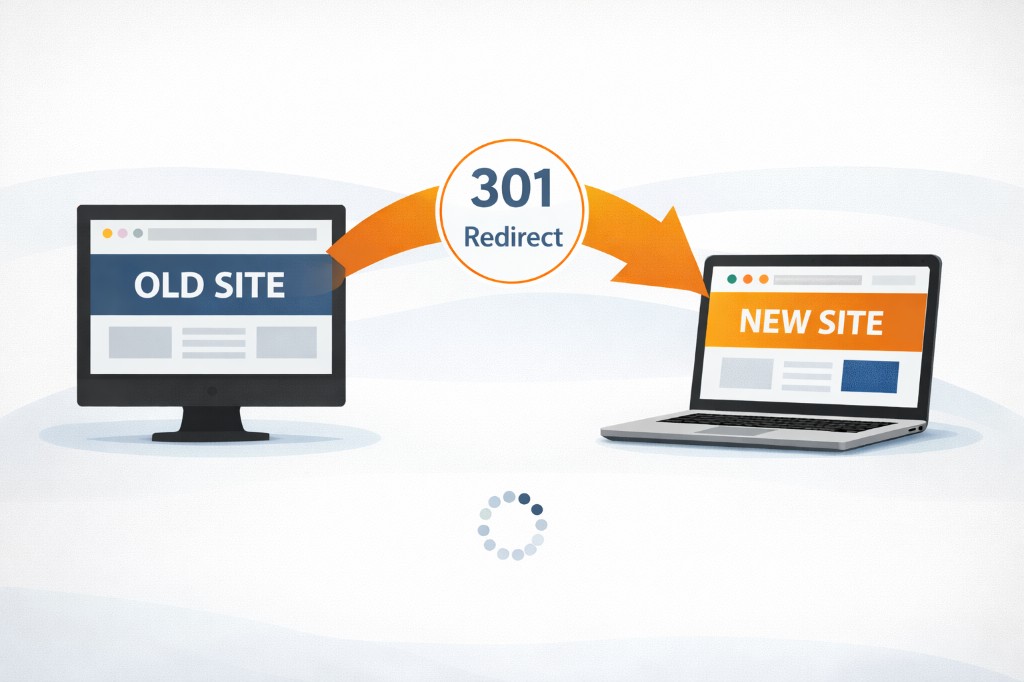
Most lawn and landscape companies don't avoid a website redesign because they don't want a better site; it's because they've seen what happens when a redesign goes wrong: rankings drop, call volume dips, and everyone is left guessing what broke.
Luckily, you can redesign safely if you inventory what already works, keep or properly redirect every important URL, maintain on-page intent, and verify tracking before and after launch. A redesign is only risky when it's treated as a visual project instead of a structured migration. Use the sections below to protect your SEO, keep leads coming in, and launch with confidence.
Step 1: Inventory What's Working With Your Website Design Before You Touch Anything
Before a single page is redesigned, you need a snapshot of your current website's winners. Document your core service pages, your top-traffic pages, your service area or location pages (if you have them), and any blog posts that consistently bring visits. You should also capture every conversion point, including forms, phone numbers, and any booking buttons.
Treat this as a revenue audit. If a page gets traffic, produces leads, or ranks for a valuable search, it is doing its job. Your goal is to improve the experience without breaking what already performs.
Step 2: Keep URL Changes to a Minimum
The easiest way to lose rankings is to change a bunch of URLs simply because the new site structure looks cleaner. If possible, keep high-value URLs the same. When a URL must change, make that decision intentionally and document it.
URL risk usually shows up when service pages get renamed, multiple pages are consolidated into one without a plan, location pages get removed entirely, or a platform change creates new URLs automatically. None of those are fatal if they're planned, but they are costly when they happen by accident.
Step 3: Build a Redirect Map to Your New Website Pages
If a URL changes, you need a 301 redirect from the old page to the most relevant new page. That does not mean redirecting everything to the homepage; it means sending each old page to the closest match so Google and users can clearly understand where that content went.
Your redirect map should include every service page URL that changes, every location page URL that changes, any high-traffic blog posts that move, and any older URLs that are still indexed and could generate leads. Redirecting everything to the homepage often signals that the content no longer exists, which can cause rankings to fall.
Step 4: Preserve Search Intent on Key Pages
A website redesign can break SEO even with perfect redirects if the page content no longer matches what the searcher wanted. For your top service pages, keep the topic focused. Aim for one main service per page, a clear headline that matches the service, and sections that answer common buyer questions.
Include proof elements that help people choose you, such as reviews, photos, service area details, and a simple explanation of your process. Keep calls to action clear. Your site can look premium while still being specific and helpful, which is what search engines and customers reward.

Callout: Incorporating differentiators and proof into your new service pages can help build trust in your company and position you as the best choice.
Step 5: Tracking Setup Before Launch Day
Redesigns are where tracking quietly breaks. Don't assume it will keep working. Before launch, confirm that Google Analytics and Google Tag Manager are installed correctly, that call tracking (if used) is configured properly, and that form submissions are being recorded as conversions.
Also, validate that conversions are actually firing for the actions you care about, such as calls, form fills, and booking events. If tracking breaks, you can't tell whether the lead flow dropped or you simply stopped measuring it.
Planning a Website Redesign?
We help lawn and landscape companies redesign and migrate websites without losing hard-earned SEO rankings, tracking, or lead flow.
Get a ConsultationStep 6: Launch Day Quality Check
On the launch day of your new website design, do a quick but disciplined quality check. Load your top pages, including your homepage, contact page, and primary service pages. Submit a test form and confirm it reaches the right inbox. Check that the phone number is clickable on mobile and that it matches the number you want customers to call.
Test redirects by visiting old URLs and confirming they land on the correct new pages. Make sure you didn't accidentally set the site to noindex, which can hide it from Google. Finally, take a quick look at mobile speed; you do not need perfection, but you do need a site that loads reliably.

Step 7: Post-Launch Monitoring for 30 Days
The first month after launching your new website design is when you protect the investment. Watch calls and form leads for both volume and quality. Use Google Search Console to monitor indexing issues, coverage errors, and any spikes in 404 errors that indicate missed redirects.
Track organic traffic trends weekly rather than day-to-day, and monitor your rankings for your most valuable services. The most expensive mistake is waiting six to eight weeks to check. If something broke, you want to fix it while Google is still reprocessing the changes.
Ready to Redesign Your Website Without the Guesswork?
A website redesign should improve lead quality and conversion without sacrificing the rankings you've already earned. If you want to leave this to professionals, Lawnline Marketing offers website design services as part of our Growth Programs. Call (813) 944-3400 to schedule a consult!