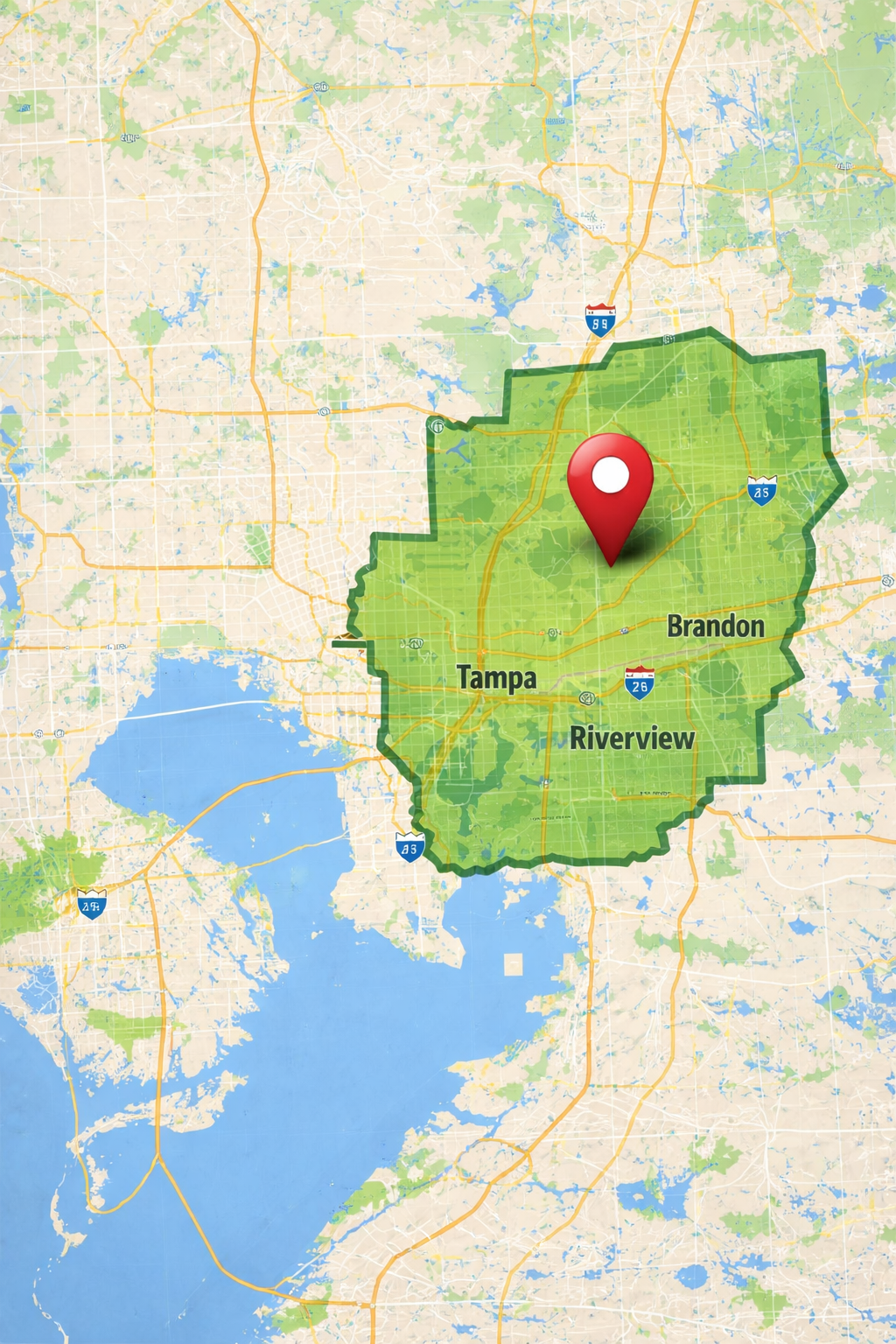
If you are getting "bad leads," there is a decent chance it is not your ads, SEO, or sales process, but your service area. Your service area should be defined by where you can reliably service customers at your target margin today, not by where you wish you could go. Once you set that boundary, you need to communicate it clearly on your website, in ads, and during intake so you stop wasting time on out-of-zone estimates and start building tighter routes. This is not just a marketing problem. It is an operations problem that shows as marketing pain in the form of low close rates, excessive drive time, inconsistent production, and teams stretched thin.
Why "We Serve the Whole Metro" Breaks Down
Most seven-figure lawn and landscape companies grow into a vague service area. A few jobs pop up farther out, you say yes, and then those jobs become normal. Before long, your map is a mess. Lead quality drops because you are attracting people you should not be taking. Close rate drops because you are quoting work you cannot service efficiently. Route density suffers because you are mixing tight neighborhoods with long travel gaps. Operations gets reactive because the schedule is always fighting geography. If your sales team has ever said, "We can do it… but it depends," you are already feeling the service area problem.
Define Your Service Area by Capacity, Margin & Geography
A useful service area is not a circle around your shop. It is built from three realities: capacity, margin, and geography. Start with capacity, which means what you can actually fulfill weekly without heroics. Ask how many mowing stops you can service per day per crew, how many maintenance routes you can run per week, and how many installs you can take without crushing production. If you do not know, estimate it. The goal is not perfect math; it is a baseline for decisions.
Next is the margin. Travel time quietly kills margin because the farther you go, the more hidden costs stack up. That includes windshield time, fuel, non-billable crew hours, schedule gaps, and late-day delays that ripple across the week. Your service area should be the geography where you can hit production targets and protect margin at your current pricing.
Finally, factor in geography the right way. Density beats distance. A tight route with slightly smaller tickets often outperforms bigger tickets scattered across a wide map.
Use a Tiered Service Area Coverage Model
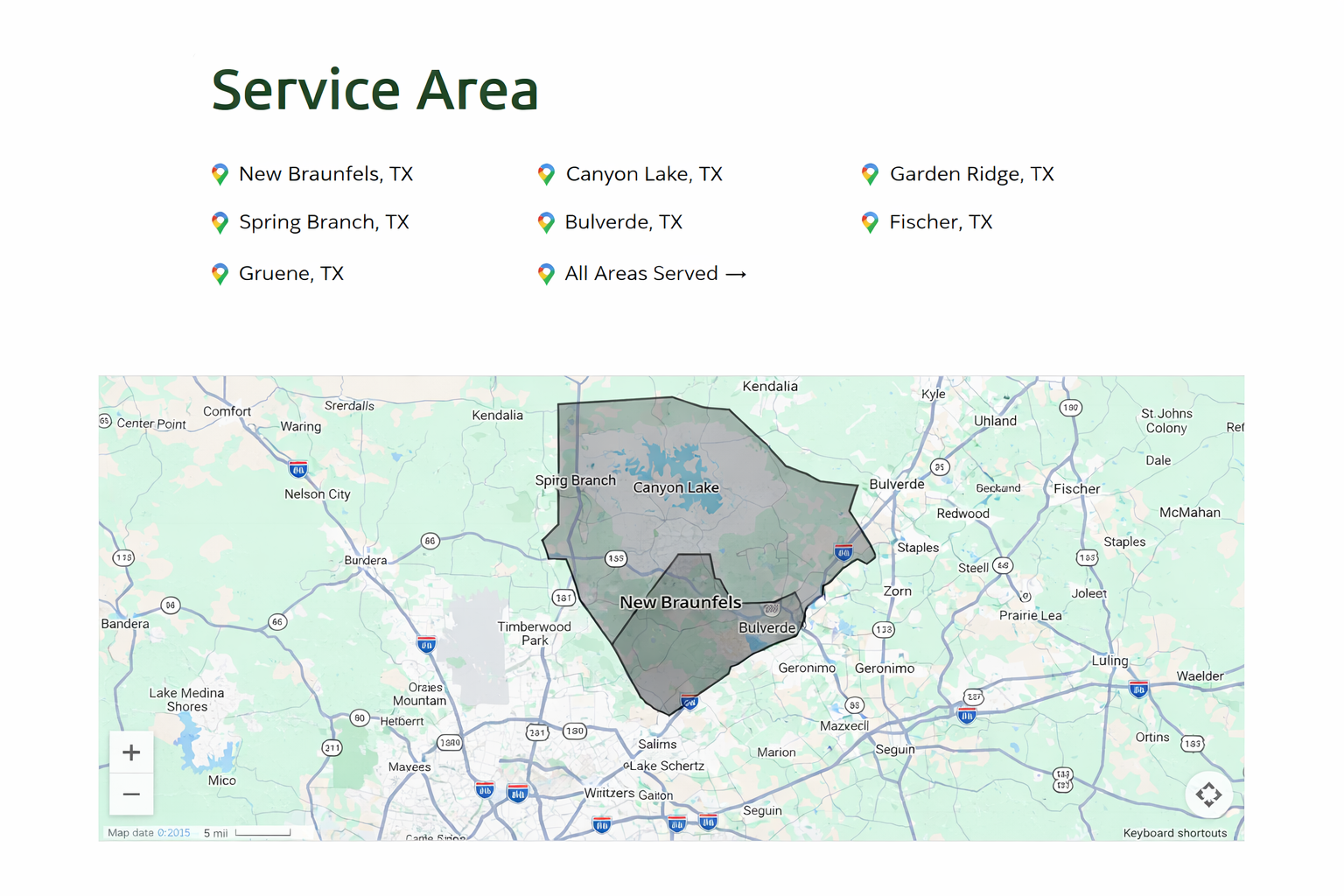
A practical way to define service area coverage is a tiered model. Create a core zone where you want the majority of recurring work because density is highest. Add a secondary zone where you accept recurring work selectively as fill-in routes only. Then define an extended zone that is reserved for high-ticket work only, or not at all. This gives your office team a clear yes, no, and maybe framework without requiring the owner to approve every address.
Write Down Internal Service Area Coverage Rules Your Team Can Follow
Before you change your website or ads, write down your internal service area coverage rules so your team can follow them consistently. A simple starting point is to keep recurring services in the core zone, accept one-time services in core and secondary, and limit high-ticket projects to core and secondary, with select extended jobs only when minimums are met. Set minimum job thresholds for extended zones so travel is actually worth it. Define exceptions and clearly state who can approve them and when. Consistency is the goal because case-by-case decision-making is how service areas turn into chaos.
Communicate the Areas You Service Clearly
Once you define the areas you service internally, communicate it clearly externally without sounding restrictive. Your "Areas Served" experience should lead with clarity instead of a giant list of every city you have ever worked in. You can still include a list, but start with a simple statement like, "We primarily serve X, Y, and Z, plus nearby areas." Add a line that keeps the door open while protecting the schedule: "Not sure if you are in our service area? Call us, and we will confirm." If you use zones, say it plainly, such as, "Weekly service is limited to our core service area to keep routes efficient."
Callout: Make sure to align recurring ad campaigns with your core zone, and run broader project campaigns with minimums and qualifiers to avoid junk leads.
Train Intake to Qualify Location Fast
Train intake to qualify location quickly. It should not feel like an interrogation, but it must protect the schedule. A simple flow is to get the property address, confirm the service they want, determine whether it is a weekly or a one-time project, and ask when they hope to start. Location plus service type tells you where the lead belongs.
Tighten Lead Quality by Enlisting Our Help
If you want to tighten lead quality without starving the pipeline, your service area strategy should support both growth and operations. Better leads, better routes, and less time-wasting estimates all start with clear boundaries and clear communication. If you want help aligning your coverage messaging with your website and marketing, our team at Lawnline Marketing can help. Call us at (813) 944-3400 to learn more about how we do this as part of our full-service Growth Programs.