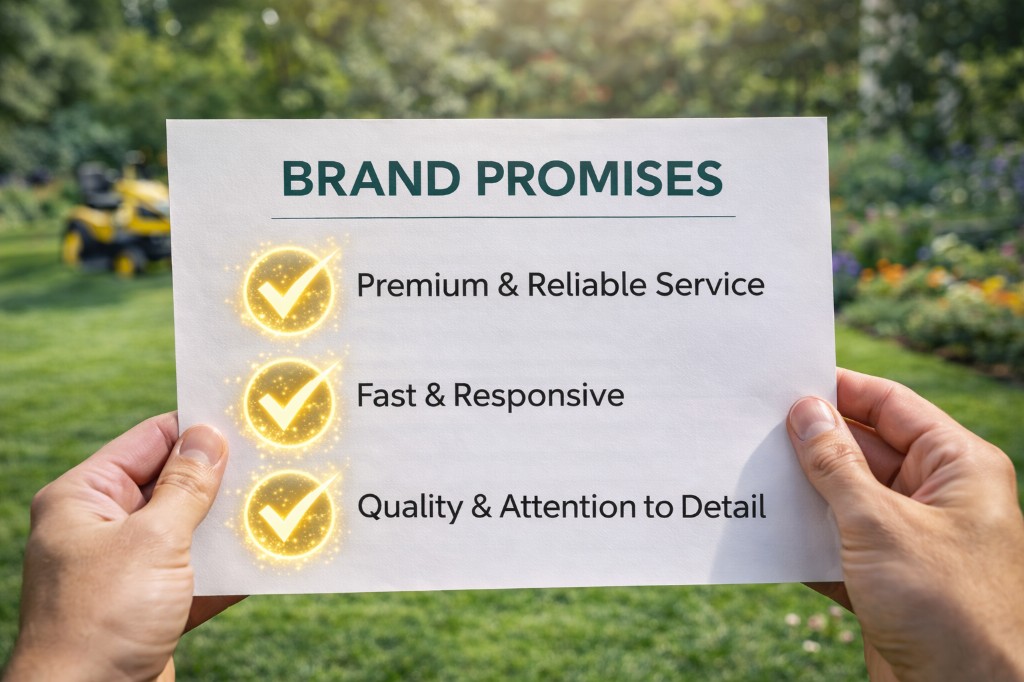
Most lawn and landscape companies do not have a marketing problem, but a promise problem. Marketing is the megaphone; if what you promise online is ahead of what your operation can consistently deliver, you will feel it fast through unhappy customers, weaker reviews, callbacks, and a team that is always behind. To align marketing with what you can deliver, define your brand promise in operational terms, measure current delivery reality, and market only what you can hit every week. Then, fix bottlenecks before you scale demand.
The Real Cost of a Promise You Can’t Keep
When marketing gets ahead of operations, you do not just lose leads; you lose trust. It shows up when you promote fast quotes but estimates take a week, or when you position as high-end but jobsite cleanup, truck presentation, or communication does not match.
It also shows up when weekly reliability breaks down during rain weeks and customers get silence instead of updates. The pattern is consistent: you attract the wrong buyer, you frustrate the right buyer, and your team absorbs the blame for a message they did not create.
Step 1: Translate Your Brand Promise Into Service Standards
Words like “premium”, “reliable”, and “white-glove” mean nothing unless they translate into standards your team can execute. Pick one primary promise and define it with specifics. For example, if your promise is fast and responsive, define callback timing, how quickly estimates get scheduled, and how fast quotes go out after the site visit. On the other hand, if your promise is quality and detail, define what detail means on-site, what cleanup looks like, and how often quality checks happen. Meanwhile, if your promise is easy to work with, define the communication system, who owns the relationship, and how scope changes are handled.
Callout: If you can’t define your brand promise, you can’t deliver it, and you definitely shouldn’t advertise it.
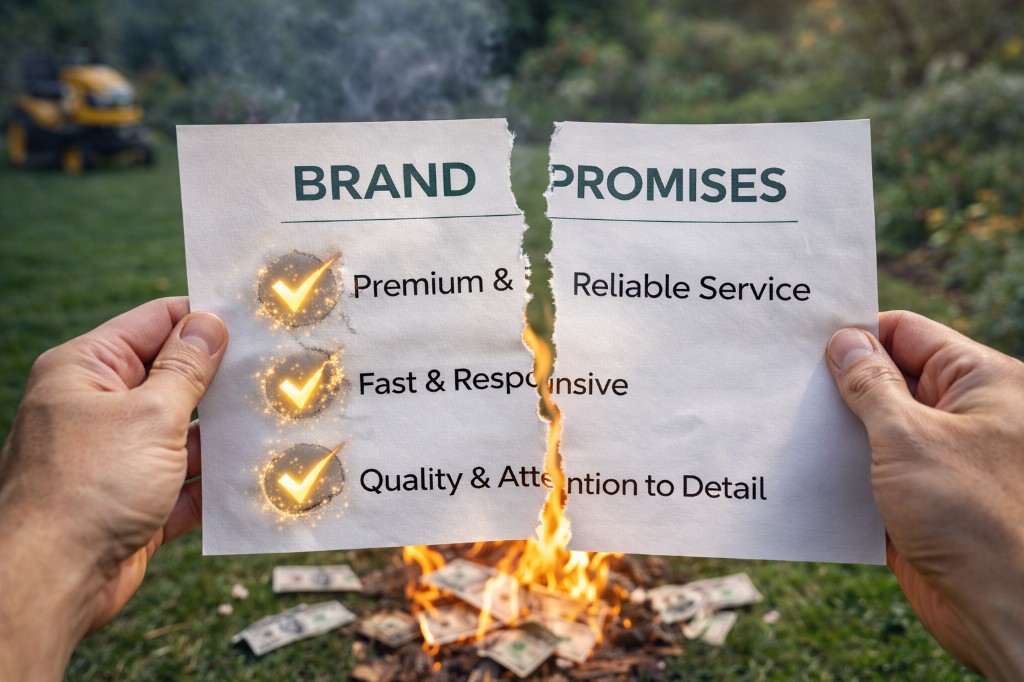
Step 2: Audit Ops Reality - Capacity, Speed & Consistency
You do not need perfect data; you need a truthful baseline. Run a quick two-week audit and track your average lead response time, days from first contact to estimate, days from estimate to quote, schedule reliability, callback rate, and the most common communication gaps that cause frustration. Then, compare ops reality to your marketed promise; any gap becomes a future complaint or review.
Step 3: Match Demand to Capacity Before You Turn Up Spend
A campaign that works will expose operational weakness faster than anything else. Before you scale demand, decide what you can confidently sell this month. Know how many maintenance accounts you can onboard without degrading quality, how many projects you can start within a reasonable timeframe, and which services create margin but also operational headaches.
The next step is to align what you promote. If routes are full, do not advertise instant weekly openings. If project start times are long, market quality and process and set expectations early. If you are upgrading your client base, tighten targeting and stop trying to win every zip code. Marketing should fill your schedule, not flood your operation.
Step 4: Fix the Bottleneck That Breaks the Promise
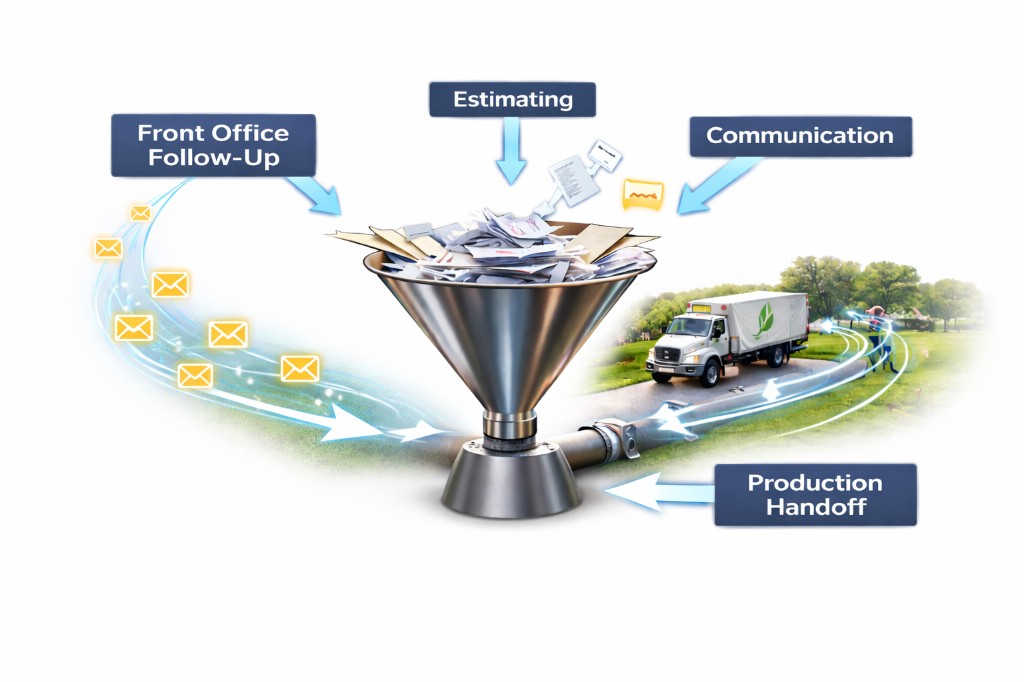
Most misalignment comes from a small set of chokepoints. For example, front office follow-up breaks a responsiveness promise if calls are missed or callbacks lag. Estimating flow breaks confidence if quoting is slow, even when the work is strong. Production handoff breaks trust when what was sold is not what gets delivered. Communication breaks the experience when weather or delays happen and customers hear nothing. Pick one bottleneck, fix it, then scale.
Common Mistakes to Avoid
Common mistakes you’ll want to avoid making when aligning your brand promise to ops reality include:
- Do not overpromise just to beat competitors. You’ll win bad-fit customers and repel good ones.
- Do not market every service you offer. You should promote what you want more of and can deliver best.
- Do not use premium language without premium proof. Photos, reviews, process, and presentation must match.
- Do not turn up ad spend to solve a sales problem caused by slow follow-up. Speed is usually the first fix.
The Alignment Checklist You Should Use Weekly
If you want a simple operating rhythm, ask the same questions every week.
- Are we marketing the services we can deliver best right now?
- Is our main promise clear and executable by the team?
- Do customers know what happens next after they inquire?
- Are timelines and expectations stated plainly and consistently?
- Are reviews and complaints trending the right direction?
If you can answer yes across the board, marketing becomes a lever instead of a gamble.
Start aligning your brand promise with what you can deliver
Call us to enlist our help!
If you want help pressure-testing your brand promise against real delivery capacity and tightening your message so you attract the right customers, Lawnline Marketing will help you build a marketing strategy that matches operations and scales without the headaches. Call (813) 944-3400 to book a Growth Program consult!